
You want a heater that keeps tank temperature steady, is safe, and fits your tank size — that choice prevents stress and illness in your fish. A high-quality, reliable heater with accurate temperature control is the single best upgrade you can make for a healthy aquarium.
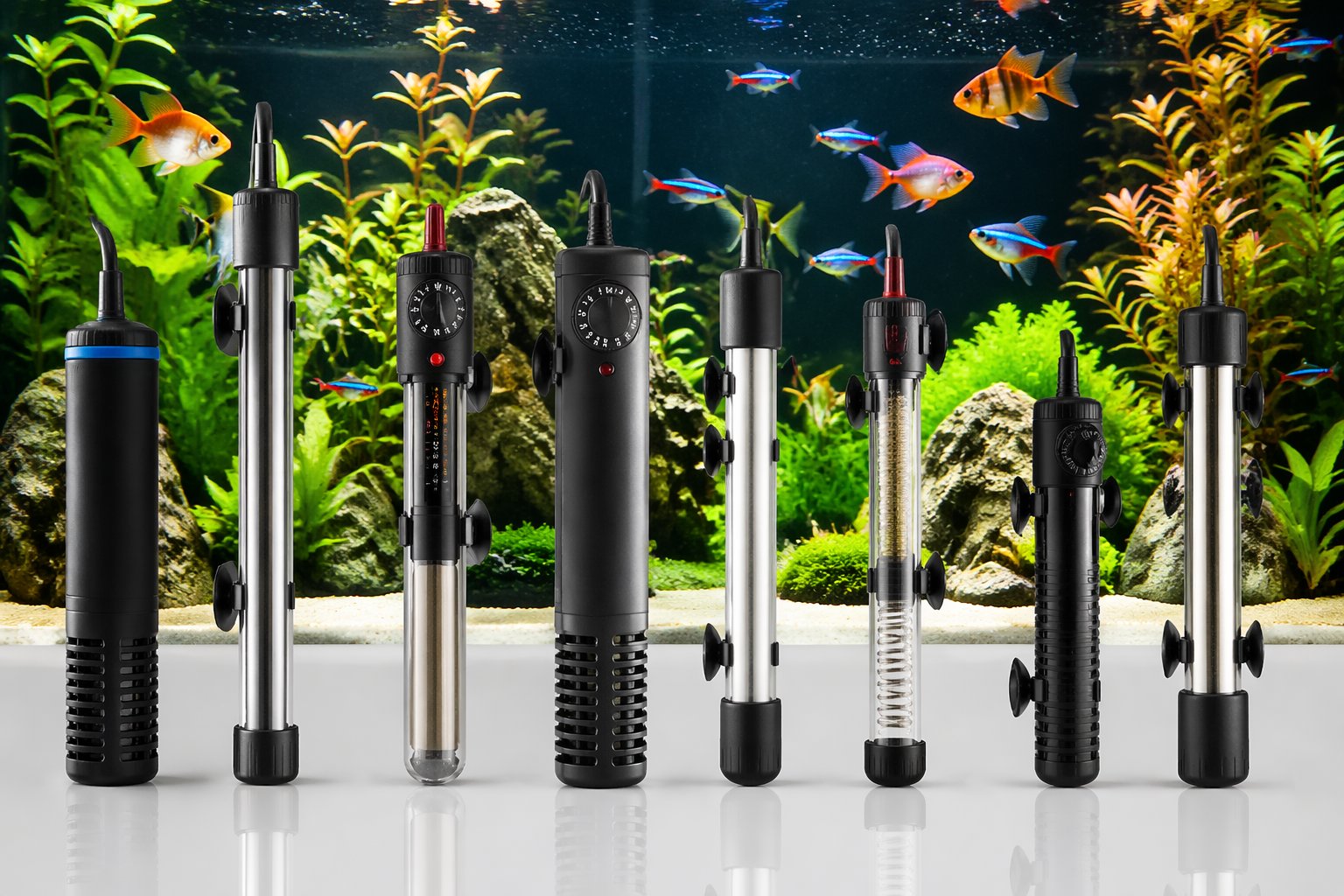
This guide shows top-rated heater types, the key features to compare, and how to pick the right wattage and placement for your setup. You’ll learn which models earn trust for accuracy and safety so you can buy with confidence and protect your fish.
Key Takeaways
- Choose a heater that matches your tank size and holds temperature steady.
- Look for accuracy, safety shutoffs, and proven reliability.
- Know basic setup and placement to avoid cold spots and failures.
Top-Rated Aquarium Heater Models and Features
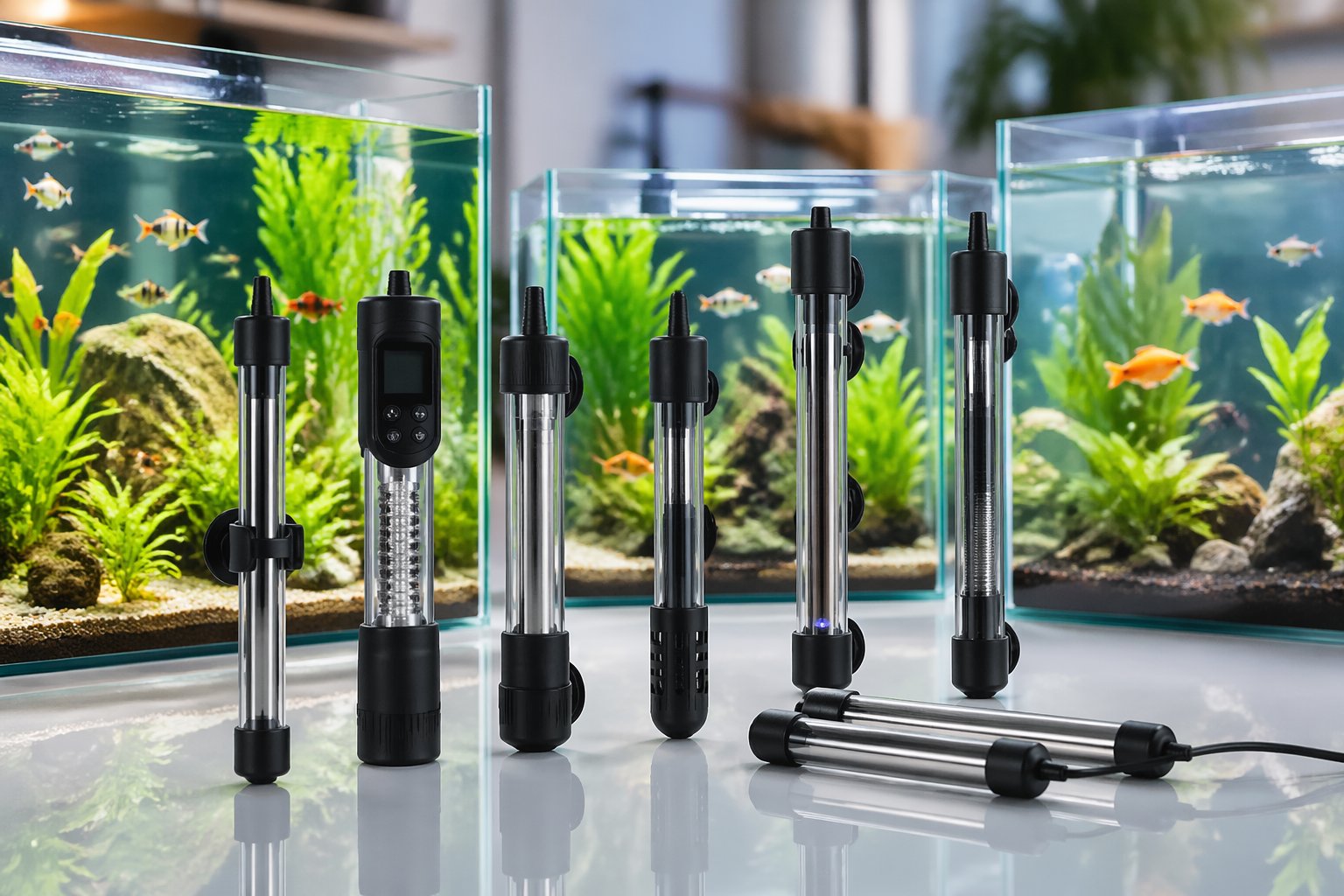
You want a heater that keeps temperature steady, protects fish, and fits your tank size and setup. Look for models with clear controls, reliable safety cutoffs, and the right wattage for your aquarium.
Advanced Submersible and Adjustable Heaters
Submersible heaters give you flexible placement and better heat distribution. Models like the Fluval E300-style and Orlushy submersible heaters use digital controls or precise dials so you can set exact Celsius or Fahrenheit targets. Adjustable heaters with an external controller or built-in microprocessor provide tighter thermostatic control than simple preset sticks.
Flat Neo-Therm and Cobalt Neo-Therm (flat profile) heaters sit against the glass and free up space. They heat evenly and are less obtrusive than bulky tubes. Choose a model with dual sensors or digital readout if you need ±0.5°C accuracy. For small tanks, mini aquarium heaters with low wattage and adjustable settings work well.
Safety, Accuracy, and Reliability Comparisons
Safety features matter more than bells and whistles. Seek shatterproof glass, automatic shutoff on overheating, and thermal cutoffs. Brands like Eheim Jäger and Hygger often include reliable auto-shutoff and robust housing.
Accuracy comes from build quality: look for models with calibrated thermostats, dual sensors, or microprocessor control to reduce temperature swings. Reliability depends on components and testing history; Eheim Jäger and Cobalt Aquatics flat Neo-Therm heaters are known for long life. Use a separate thermometer to verify readings — internal displays can drift.
Best Choices for Different Tank Sizes
Match wattage to tank volume: roughly 3–5 watts per gallon is a common starting point. For 10–20 gallon tanks, 50–100W submersible heaters like Orlushy or Hygger work well. For 40–55 gallon tanks, step up to 200–300W models or use two lower-watt heaters to balance heat and provide redundancy.
For nano tanks, choose a mini aquarium heater or a low-watt preset heater and avoid oversized units that overheat quickly. Large tanks benefit from multiple heaters placed at opposite ends to create uniform temperature. Flat Neo-Therm heaters suit shallow or planted tanks where a low-profile design helps hide equipment.
Warranty and Durability Insights
Check warranty length and what it covers before buying. Longer warranties often indicate manufacturer confidence. Brands such as Eheim and Cobalt Aquatics tend to offer multi-year coverage; read terms for defects versus wear-and-tear exclusions.
Durability hinges on materials and build: ceramic or titanium elements resist corrosion, and shatterproof glass or epoxy seals prevent leaks. Replace any heater with cracked glass or faulty seals immediately. Keep receipts and register your product if the brand offers extended warranty options.
Essential Factors When Selecting an Aquarium Heater
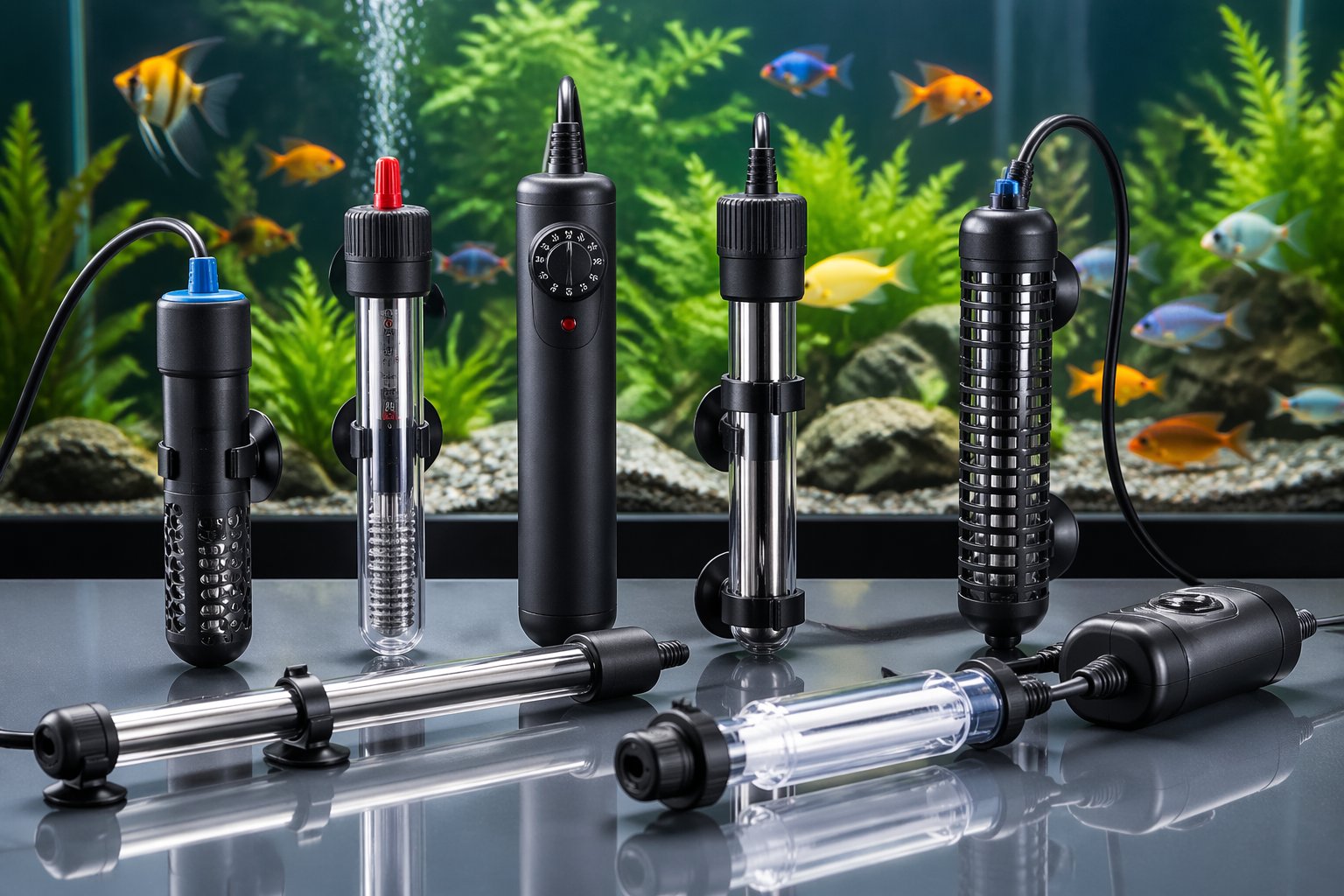
Choose a heater that matches your tank size, desired temperature, and safety needs. Focus on correct wattage, reliable temperature control, built-in safety features, and easy installation.
Wattage, Heater Size, and Tank Compatibility
Pick heater wattage based on tank volume and room temperature. A common guideline is 3–5 watts per gallon for tropical setups. For a 20-gallon tank, aim for 60–100 watts; for large aquariums over 50 gallons, use multiple heaters to spread heat and avoid hotspots.
Match heater physical size and mounting style to your tank. Fully submersible glass or titanium heaters work well for most tanks; slim immersible heaters suit small tanks with limited space. Consider substrate or external heaters only for specialized setups like planted tanks or planted-floor warmth.
Account for ambient room temperature. If the room drops below your target tank temperature by more than 10°F, add extra wattage. Also check product specs for aquarium size ranges to ensure the heater can maintain steady temperatures for your fish species.
Temperature Control and Range
Look for accurate, adjustable temperature control within the range your fish need. Many heaters offer 68–88°F ranges; set precise targets using a built-in thermostat or an external temperature controller for finer control. Aim for at least ±0.5°F accuracy if you keep sensitive species.
Thermostat types matter. Mechanical dials are simple but less precise. Digital thermostats and external temperature controllers give better stability and clearer readouts. External controllers let you override a heater if it drifts, reducing risk of overheating or chilling.
Check for temperature calibration and repeatable results in reviews. Also ensure the heater responds well to filter flow and water circulation so measured tank temperature matches the whole aquarium, not just the heater area.
Safety Mechanisms and Overheating Protection
Choose heaters with multiple safety features to limit heater failure risks. Look for automatic shutoff, thermo-safety control, and shatterproof casings like titanium instead of thin glass. These reduce risk if the heater is exposed or dries out during low water.
Overheat protection should cut power if temperature exceeds set limits or if the heater loses water contact. Some models include indicator LEDs or alarms to warn you. Also prefer units with safety certifications and clear IP/submersion ratings.
Plan for redundancy. Using two heaters of half the needed wattage keeps the tank warm if one fails. Regularly test heaters and monitor tank temperature with a separate thermometer so you catch failures early.
Installation and Ease of Use
Choose a heater that installs securely and matches your tank setup. Suction-cup mounts, clip mounts, or inline external housings should hold the unit near steady water flow. Place the heater where circulation moves warm water across the tank—near a filter outflow works well.
Look for clear controls and readable displays. Digital controls and resettable thermostats simplify setting a target temperature. Adjustable aquarium heaters let you change temperature without tools, while external temperature controllers make fine tuning easier.
Maintenance should be simple. Pick models with corrosion-resistant elements (titanium or coated metal) and easy cleaning. Check power cord length, warranty, and accessibility so you can remove or adjust the heater without stressing the tank or its inhabitants.
Frequently Asked Questions
This section answers practical choices about wattage, heater types, safety features, and options for large tanks. Each question gives a clear rule or step you can follow.
How do I choose the right heater wattage for my tank size?
Use a basic rule: 3 to 5 watts per gallon for tropical tanks in a room with normal temperature. For cooler rooms or big temperature differences, add watts toward the higher end.
For example, a 20-gallon tank usually needs 60–100 watts. Always check the heater manufacturer’s chart and round up slightly if your tank is tall or the room gets cold.
Is it better to oversize a heater or match the recommended wattage?
Match the recommended wattage for steady control and safety. One oversized heater can heat too fast and create hot spots or thermostat cycling.
If you worry about heat loss or need backup, use two heaters of lower wattage instead of one large unit. Two heaters split the load and give redundancy if one fails.
Which heater type is more dependable: glass, titanium, or inline?
Titanium heaters resist corrosion and last longer in salty or planted tanks. They heat quickly and handle higher pressures, so they are very dependable.
Glass heaters are cheaper and accurate but breakable. Inline heaters mount outside the tank and work well if you use a canister filter, reducing tank clutter.
What features matter most for safety and temperature stability in a heater?
Look for a reliable thermostat with +/-1°F (or +/-0.5°C) accuracy for stable temps. An automatic shutoff or tip-over protection prevents dry-run damage.
Choose fully submersible models for underwater placement and shatterproof housings if possible. A visible digital display and clear temperature controls make checks faster and reduce errors.
Which aquarium heaters are most reliable for large tanks?
For large tanks, use high-wattage titanium heaters or multiple matched glass heaters placed at opposite ends. Titanium handles heavy use and offers long-term durability.
You can also use inline heaters with a strong external filter loop for even heat distribution. Always plan redundancy: two heaters provide backup and steadier temperatures.
Should I use an external temperature controller with my heater?
Yes, use an external controller if you need precise control or added safety. Controllers monitor water temperature with a separate probe and switch the heater on or off more accurately than many built-in thermostats.
Controllers also add fail-safe alarms and can shut power off if temps go out of range. They are especially useful for reef tanks, breeding setups, or expensive livestock.