
You can turn any tank into a healthy, low-maintenance ecosystem by adding the right aquarium plants that fit your tank size and skill level.
- Highlight:
The best aquarium plants can improve water quality, give fish shelter, and make your tank look more natural.
Freshwater aquarium plants improve water quality, give fish shelter, and make your tank look natural without needing fancy equipment.
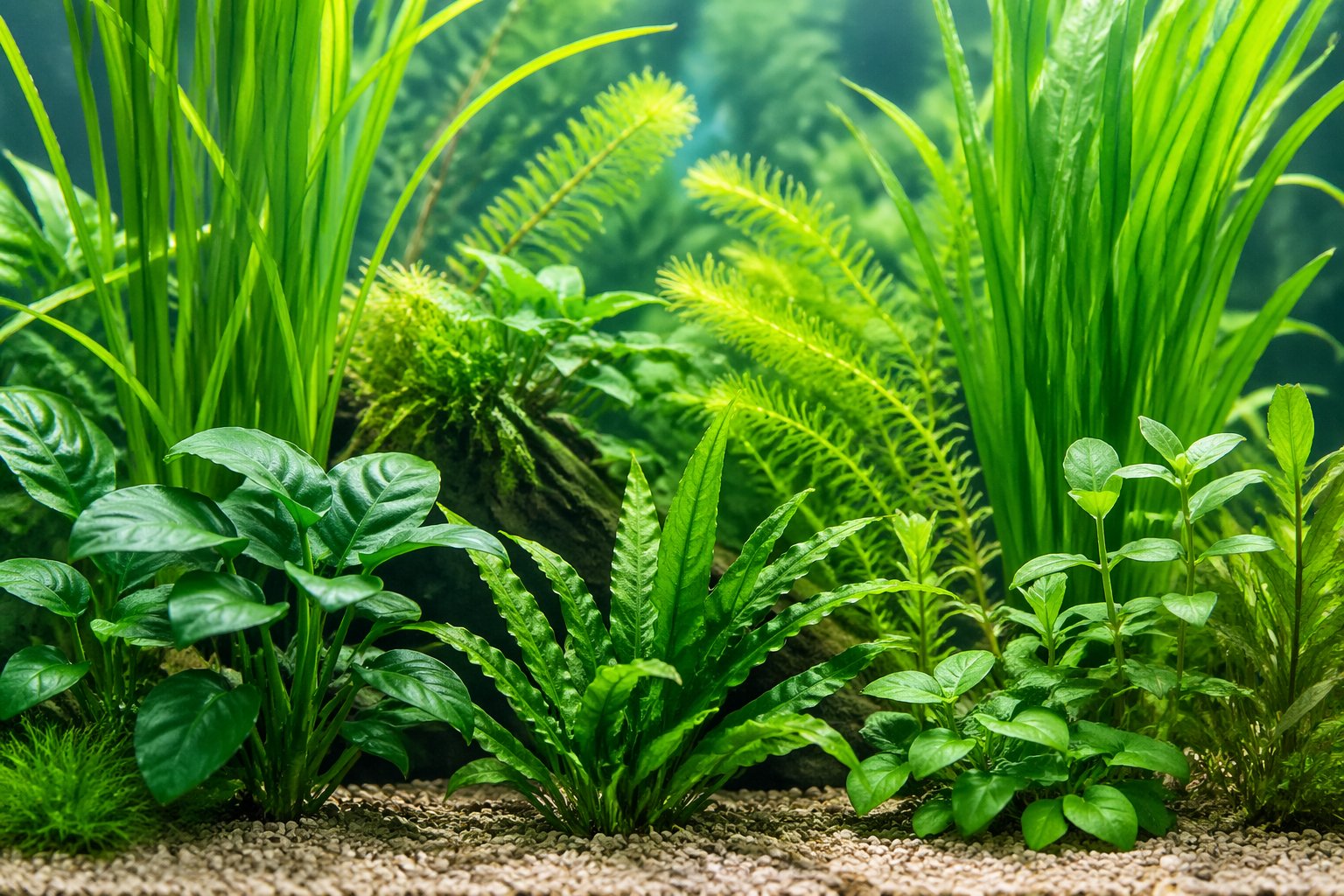
Choose plants based on how much light and care you can give, and pick a mix of foreground, midground, and background species to create depth.
Live aquarium plants shipped from trusted sellers arrive healthy and can thrive with simple care like proper lighting, substrate, and routine trimming.
Key Takeaways
- Live Aquarium Plants boost tank health and create a natural look.
- Pick plants that match your lighting and maintenance ability.
- Buy from reliable sources and follow basic care steps.
Table of Contents
Benefits of Live Aquarium Plants
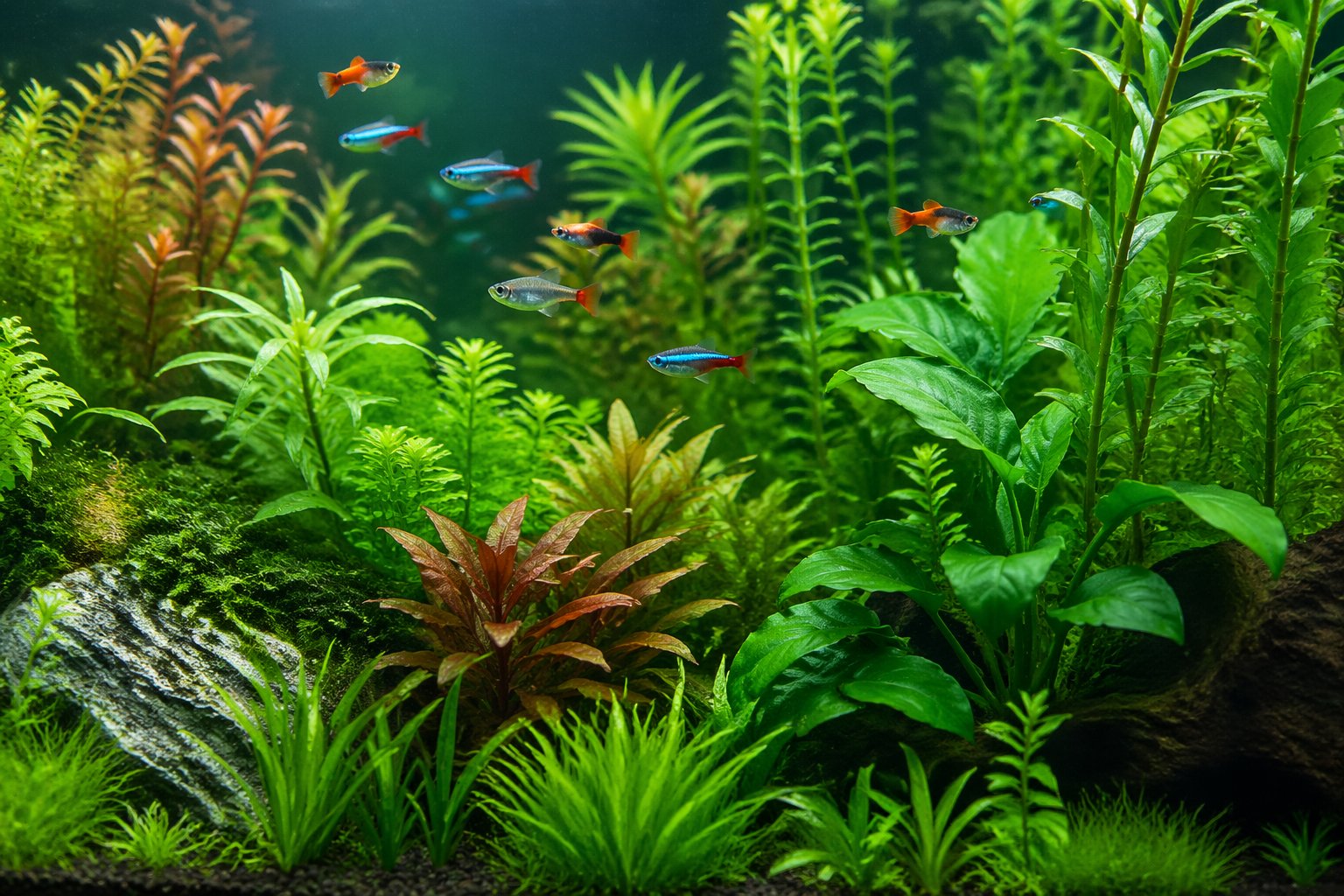
Live plants give your tank cleaner water, more oxygen, and safer places for fish to hide and breed.
They pull in nutrients from fish waste, help control unwanted algae, and make a planted tank look natural and calm.
Natural Filtration and Water Quality
Live aquarium plants act like a low-tech filter by absorbing ammonia, nitrite, and nitrate from the water.
Fast-growing species such as hornwort, anacharis, and water sprite excel at taking up excess nutrients that come from fish waste and uneaten food.
Plants use these nutrients to grow, which reduces how often you must do large water changes and helps keep nitrate levels within safe ranges for most freshwater aquarium plants and fish.
Roots and substrate plants also trap debris and promote beneficial bacteria growth on leaf surfaces and root zones.
Those bacteria further break down nitrogen compounds, improving overall water chemistry.
If you plan a planted tank, choose a mix of root feeders (like crypts) and stem plants to cover both substrate and open-water nutrient uptake.
Oxygenation and Algae Control
During daylight, photosynthesis lets live aquarium plants release oxygen directly into the water.
That extra oxygen benefits fish, invertebrates, and aerobic bacteria that process waste.
Keep moderate light and stable CO2 levels so plants stay productive without stressing livestock.
Plants compete with algae for the same nutrients and light.
Healthy plant growth reduces the nitrate and phosphate available for algae blooms.
Target fast-growing plants and regular pruning to maintain that competitive edge.
If algae appear, check the nutrition balance and lighting before adding chemicals.
Aquatic Habitat and Fish Well-Being
Live plants give fish shelter, breeding sites, and places to forage, which lowers stress and improves natural behaviors.
Tall stem plants and dense foreground mats create hiding spots for shy species and fry.
Floaters and broad-leaved plants provide shaded zones and resting surfaces for surface swimmers.
Plants also shape territorial boundaries and reduce aggression among fish by breaking sightlines. You can use specific plants—Java moss for fry and shrimp, Vallisneria for tall background cover—to meet the needs of your species.
A well-planted tank replicates natural habitats, so you’ll often see healthier coloration, more natural feeding habits, and higher breeding success.
Types of Aquarium Plants
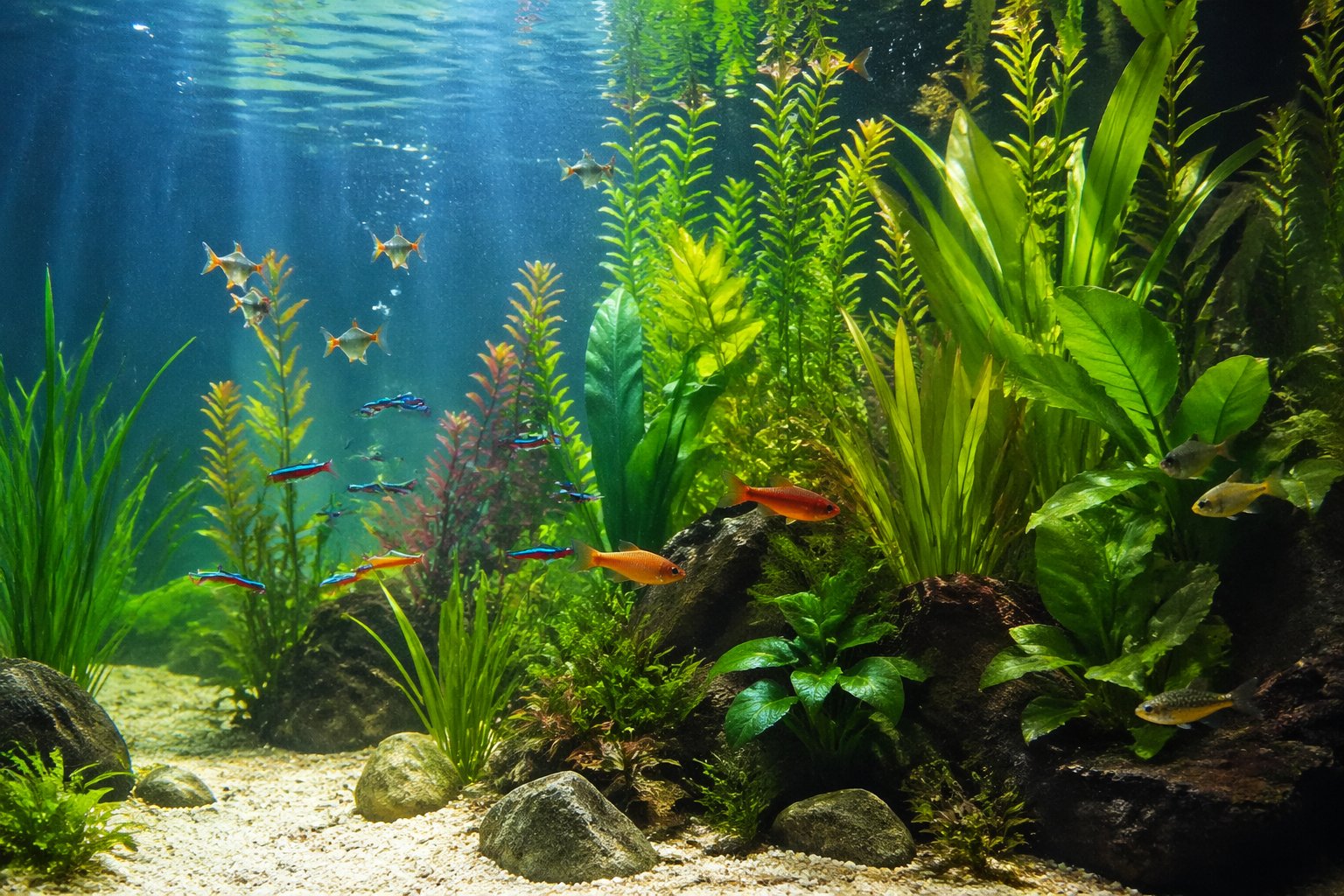
You will choose plants for size, placement, and care needs. Think about light, substrate, and whether you want rooted, stem, or attached species.
Foreground and Carpeting Plants
Carpeting plants create a low, grassy look at the front of the tank. Species like Monte Carlo, dwarf hairgrass, and pearl weed form dense mats when you provide moderate to high light and a fine substrate.
Dwarf sagittaria and Sagittaria subulata can act as short foreground plants in lower-light tanks.
Carpet plants need regular trimming to stay compact. CO₂ helps many carpeting species, especially Monte Carlo and dwarf hairgrass, but low-tech tanks can succeed with patience and good nutrient dosing.
Plant small plugs or runners close together to speed coverage.
Watch for melting or thinning after planting; adjust light and fertilization rather than replanting too soon.
Use tweezers for planting and scissors for maintenance to avoid disturbing roots.
Midground Varieties
Midground plants bridge foreground carpets and tall background species.
Cryptocoryne varieties and Anubias nana work well here because they stay moderate in size and tolerate lower light.
Bucephalandra and Java fern (Microsorum pteropus) attach to rocks and driftwood, giving structure without deep planting.
Stem plants like rotala rotundifolia and ludwigia repens can also fill the midground if you trim them to maintain bushy growth.
Amazon sword (Echinodorus, especially Echinodorus bleheri) can be used as a focal midground in larger tanks; it needs a nutrient-rich substrate and regular root tabs.
Rotate pruning to keep a layered look. Place slow growers like Anubias and Bucephalandra on hardscape where fish won’t uproot them.
Background and Tall Plants
Tall background aquarium plants give height and cover at the back of the tank.
Vallisneria and hornwort (Ceratophyllum demersum) grow fast and create a grassy backdrop. Water wisteria (Hygrophila difformis) and Anacharis/Egeria densa are stem plants that grow tall, respond quickly to trimming, and provide hiding places.
Tiger lotus and Nymphaea zenkeri add broad leaves and dramatic height; they need strong light and nutrients. Pennywort (Hydrocotyle leucocephala) also reaches the surface and spreads horizontally if left unchecked.
Plant tall species in the rear or corners and trim tops to control height. Fast growers help absorb excess nutrients, reducing algae risk, but they need frequent pruning and good circulation.
Floating and Moss Species
Floating aquarium plants shade the tank and absorb nutrients from the surface. Popular choices include duckweed, water lettuce, and pennywort as floaters.
They reduce light and can help control algae, but you must thin them to keep enough light for submerged plants.
Mosses like Java moss (Taxiphyllum barbieri), Christmas moss (Vesicularia montagnei), and other aquatic mosses attach to driftwood, rocks, or mesh. They form carpets on hardscape and provide spawning sites for fish and shelter for fry.
Use thread or glue to secure mosses and attach them to decor. Floating plants need harvesting to prevent oxygen swings at night; mosses need trimming to avoid matting and to keep water flow through the foliage.
Plant Selection and Care Essentials
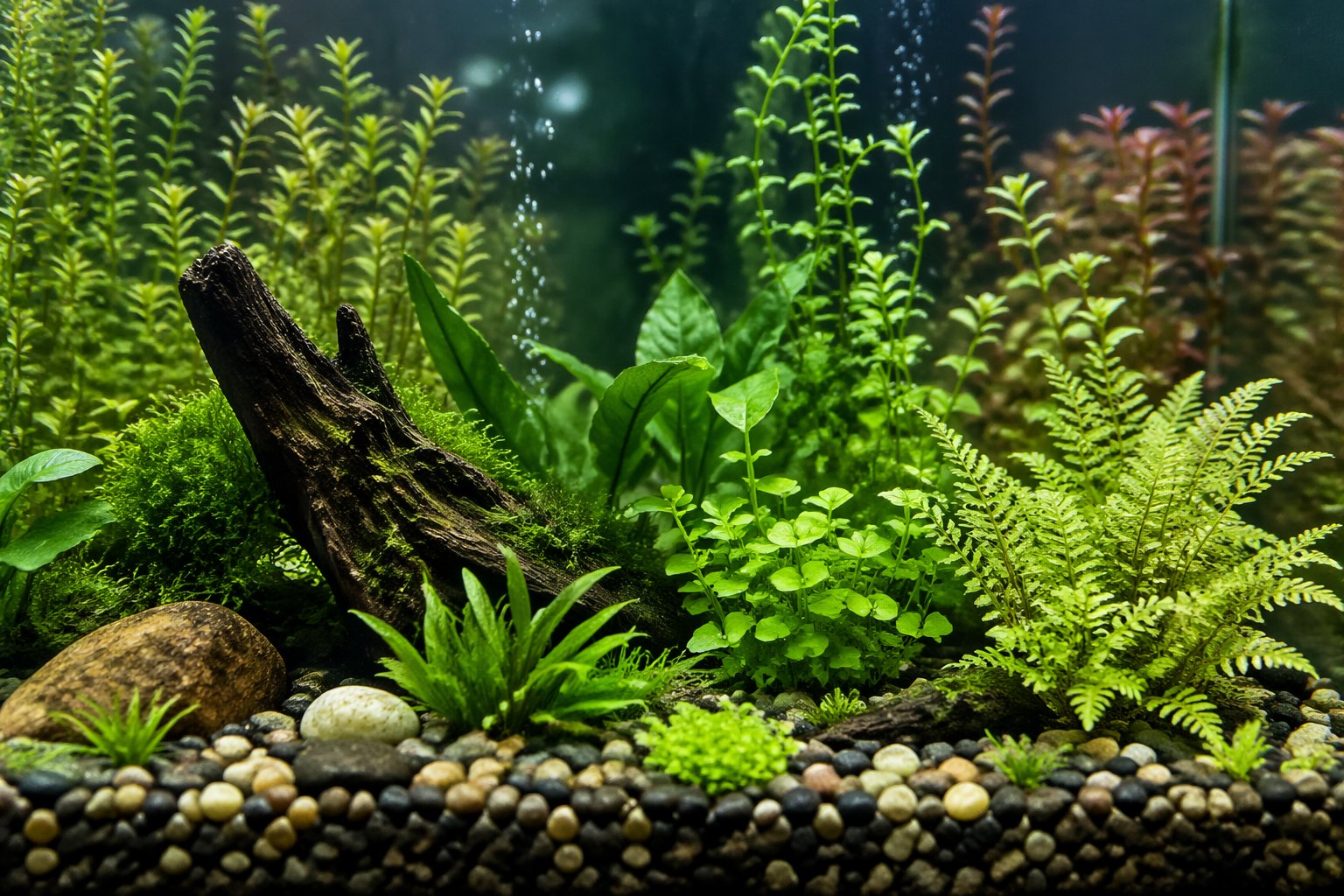
Choose hardy species that match your tank size, lighting, and maintenance time. Match substrate and nutrients to the plants you pick, and set lighting and CO2 so growth stays steady and algae stays low.
Choosing Plants for Beginners
Pick plants that tolerate a range of conditions and need little special care.
Good beginner choices include Java fern, Anubias, Amazon sword, and Java moss. These plants attach to driftwood or rocks or root in substrate and survive low to medium light.
Look for compact sizes for small tanks and larger leaves for tanks with fish that prefer cover. Avoid delicate stem plants until you can control nutrients and pruning.
Buy healthy, pest-free specimens. Quarantine new plants in a separate container for a week to remove snails or hitchhikers. Trim dead leaves before planting to reduce ammonia spikes.
Substrate and Planting Techniques
Use a nutrient-rich substrate if you plan many root feeders, or use inert gravel and add root tabs near plant roots. Root tabs release nutrients slowly and work well for Amazon sword and crypts.
Plant stem species by burying only the lower stems and leaving leaf nodes exposed. For rhizome plants like Anubias and Java fern, tie or glue the rhizome to wood or rock instead of burying it.
Create layers: use a planted-tank substrate under a thin top layer of decorative gravel to hide the base while keeping nutrients available. Place taller plants in the back and foreground carpets in front for flow and light access.
Nutrient Requirements and Fertilization
Balance macronutrients (nitrogen, phosphorus, potassium) and micronutrients (iron, manganese) for steady growth. Use a liquid fertilizer dosing schedule matched to plant load and tank volume.
For root-feeding aquarium plants use root tabs every 6–12 weeks; place them 2–3 cm from the crown. For heavy leaf feeders, dose a comprehensive liquid fertilizer weekly or follow the manufacturer’s daily/weekly instructions.
Watch for signs: yellowing leaves can mean iron or nitrogen deficiency, while pale new growth often signals low CO2. Test water for nitrate and phosphate to avoid extremes that encourage algae.
Lighting and CO2 Considerations
Match light intensity to plant needs: low-light plants do fine with 10–20 PAR at substrate level, while medium to high-light plants need 30–70 PAR. Use a timer to provide 6–10 hours of light per day.
If you add high light, consider CO2 injection to keep plants healthy and prevent algae. Start with small, controlled CO2 doses and monitor pH and KH to avoid swings that stress fish.
For most beginner setups, skip pressurized CO2 and rely on liquid fertilizers and moderate light. Add CO2 later if you move to demanding carpet plants or dense stem growth.
Aquascaping and Design Principles
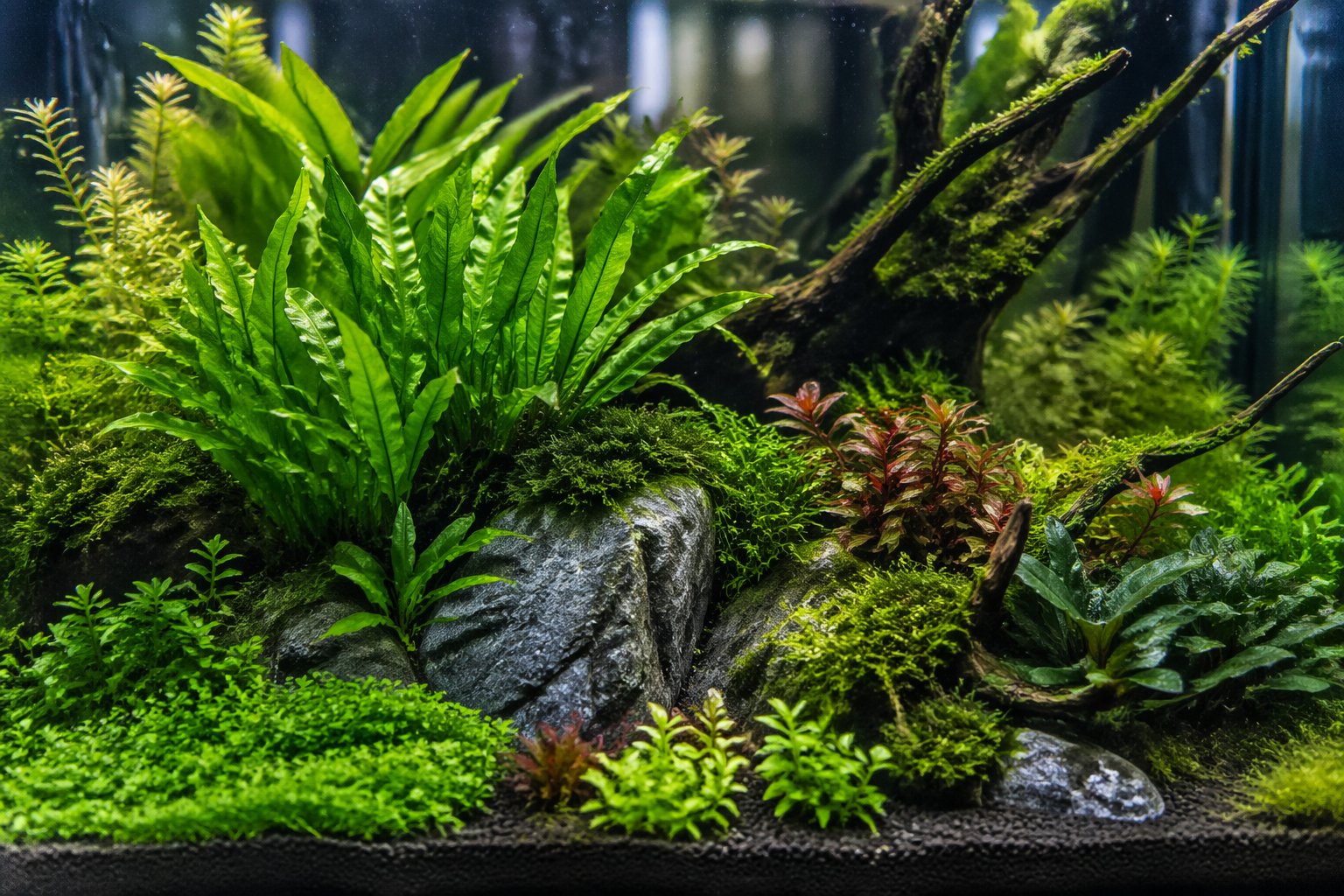
Good aquascapes make your planted tank look natural, healthy, and focused. Use depth, plant layers, and hardscape to guide the eye and support fish and invertebrate habitats.
Creating Visual Depth and Focal Points
Place taller background plants like Vallisneria or stem plants to the rear and shorter foreground plants like dwarf hairgrass up front. This creates a clear depth plane that makes the tank look larger.
Use a single strong focal point: a striking rock, piece of driftwood, or a dense moss-covered log. Position that focal point using the rule of thirds—off-center at one of the thirds intersections—to draw attention without crowding.
Vary color and contrast. Dark hardscape behind bright green plants or red stem plants near a rock creates visual contrast. Add one or two midground plants to bridge foreground and background so the transition feels natural.
Balancing Plant Heights and Texture
Mix plant types to avoid flat, uniform surfaces. Combine tall vertical stem plants with mid-height rosette plants and low carpeting species. This layered approach helps fish swim through and hides filter equipment.
Use texture to create interest. Fine-leaved plants and mosses give a soft look, while broad-leaf plants add bold shapes. Place fine textures near focal points to soften edges and coarse textures at the edges to frame the scene.
Prune regularly to keep height balance. Trim fast-growing stem plants before they overshadow mosses and carpets. This prevents shading and maintains light for all layers.
Incorporating Hardscape Elements
Choose rocks and driftwood that match scale: small stones for nano tanks, larger roots for community tanks. Hardscape anchors the layout and protects plant roots from direct current.
Arrange hardscape in groups rather than single pieces. Triangular groupings or staggered tiers create natural-looking slopes and sightlines. Bury rock bases slightly in substrate to make them appear rooted.
Use hardscape to create planting niches. Crevices and hollows let you tuck mosses and small stem plants for secure attachment. Secure mosses with thread or glue until they attach naturally.
Buying and Shipping Live Aquarium Plants
Know where to buy, what guarantees to expect, and how shipping affects plant health. Focus on sellers with clear photos, fast transit, and policies that protect live freshwater aquarium plants.
Trusted Online Shops and Nurseries
Buy from sellers that list species names, size, and growth form. Look for stores like specialist nurseries and large retailers that sell Anubias, Cryptocoryne, Java moss, and stem plants with clear photos and notes on light and substrate needs.
Check seller reputation before you buy:
- Read recent reviews and look for pictures from other buyers.
- Prefer shops that separate tissue-cultured plugs from potted plants.
- Choose vendors who avoid snail or algae infestation claims.
Local independent stores can save you money on shipping and let you inspect plants in person. Big online nurseries often have wider selection and value packs for beginners. Match the plant’s lighting and CO2 needs to your tank before ordering.
Live Arrival Guarantees
Pick sellers that offer a Live Arrival Guarantee (LAG) for freshwater aquarium plants. LAGs usually require you to report dead or damaged plants within 24–72 hours and send photos. Follow the seller’s claim process exactly to get a refund or replacement.
Read the guarantee details:
- Some guarantees cover only certain shipping methods.
- Tissue-cultured plants may have different policies than potted plants.
- Guarantees often exclude plants stressed by delayed delivery or extreme weather.
Keep packaging and photos until the claim resolves. If a seller has a clear refund timeline and prompt customer service, you reduce risk and stress when introducing new live plants to your tank.
Free Shipping and Order Considerations
Free shipping can lower cost but check transit time and protection. Fast shipping (1–3 days) reduces stress on plants; two-day options help if you order delicate stem plants or moss. Free shipping sometimes uses slower methods that increase mortality risk.
Consider order size and packaging:
- Smaller orders may ship in padded boxes with moisture packs.
- Larger or heavier orders might be consolidated and take longer.
- Ask if plants ship bare-root, potted, or in tissue culture.
Plan orders around weather. Avoid ordering during heatwaves or winter freezes unless the seller uses temperature-controlled packaging. Combine plants to meet free-shipping thresholds only if you can house them safely on arrival.
Frequently Asked Questions
You will find specific plant choices, where to buy healthy stock, and quick checks to spot real versus fake plants. The answers also explain which species suit bettas, which plants to avoid, and how to stop plant melt and algae before it spreads.
What are the best beginner-friendly live plants for a freshwater fish tank?
Java fern, Anubias (barteri or nana), and Java moss are very low-light and low-maintenance.
Amazon sword and crypts work well if you add root fertilizer and moderate light.
Dwarf sagittaria and duckweed grow quickly and tolerate varied water conditions.
They help hide equipment and provide cover for fry and shy fish.
Where can I buy healthy live plants locally, and what should I look for before purchasing?
Check local fish stores, plant-only aquatics shops, and aquarium clubs for healthy stock.
Farmers markets and garden centers sometimes sell aquatic plants but inspect them closely.
Look for vibrant color, intact leaves, and no slimy film or heavy algae.
Avoid plants with mushy stems, holes, or lots of brown or translucent patches.
Which live plants are safe and suitable for betta tanks?
Anubias, Java fern, and Marimo moss balls are betta-safe and attach to wood or rocks.
Floating plants like Amazon frogbit or duckweed give bettas rest near the surface.
Choose plants with broad leaves or stable bases so bettas can rest without disturbing roots.
Avoid strong-flow plants that increase current; bettas prefer calm water.
How do I tell the difference between real and artificial options, and which is better for my setup?
Real plants have natural variation in color, small imperfections, and grow over time.
Artificial plants look uniformly colored, may have seams, and do not change or grow.
Live plants improve water chemistry and offer oxygen and shelter.
Artificial plants are easier to clean and pose no risk of plant melt, but they do not benefit water quality.
What plants should be avoided because they can rot, melt, or harm fish in an aquarium?
Fast-rotting stems like some bulb plants and delicate stem plants from emersed growth can melt when submerged.
Plants with thin leaves and weak roots often decay and foul water if they die quickly.
Avoid non-aquatic garden plants and those sold as “pond plants” without confirmation they tolerate submerged life.
Also skip plants treated with pesticides or herbicides unless fully rinsed and quarantined.
What are common causes of plant melt and algae growth, and how can I prevent them?
Plant melt often follows a sudden change in light, temperature, or water chemistry.
Introduce plants slowly, keep lighting consistent, and use substrate or root tabs when needed.
Algae grows with excess light, excess nutrients, or poor maintenance.
Limit light to 6–8 hours, do regular water changes, avoid overfeeding, and balance nutrients with dosing or fertilizing as required.